 Finance Office - Tourist Office - Rouen
The finance office: a Renaissance masterpiece in Rouen
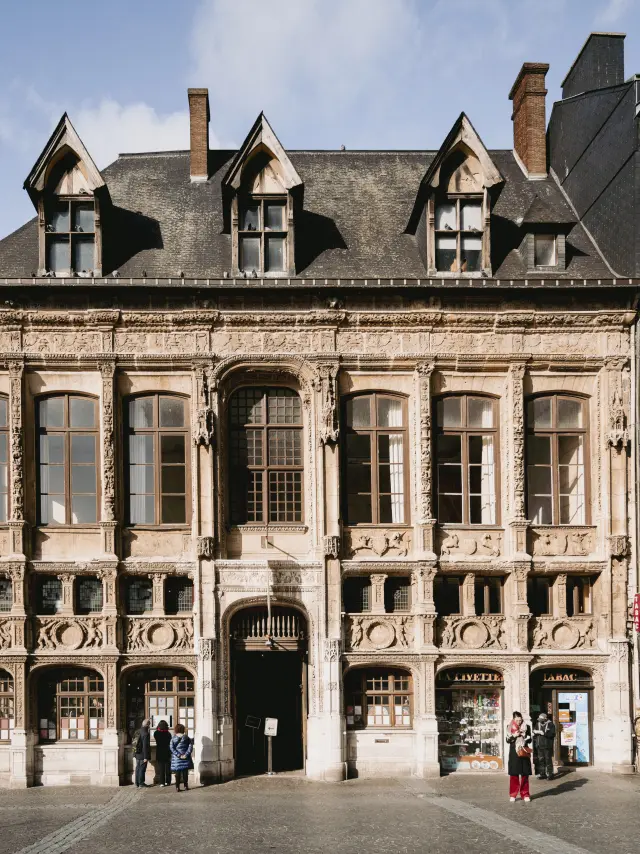
This building, which faces Rouen’s legendary cathedral, was built in 1509. It used to be the Hôtel des Généraux des Finances, which later became the Bureau des Finances, and now houses the Tourist Office. Currently undergoing renovation, Rouen Tourism welcomes you to the Musée des Beaux-Arts and Jumièges.
Thomas Bohier, General of Finance, commissioned Roulland le Roux, the architect of the cathedral’s central portal, to build the building. Its style is similar to that of the Palais de Justice in Rouen and the Hôtel Bourgtheroulde. It is a fine example ofLouis XII architecture, marking the transition between Gothic art and the early Renaissance. This was a period of intense architectural and decorative research and experimentation. The general idea was to dilute Gothic forms with Italian decorations. Roulland le Roux drew inspiration from the latest stylistic innovations in the construction of the Château de Gaillon, in the Eure department, to design the finance office.
From Louis XII architecture to Claude Monet's studio
Its two facades decorated with arabesque and candelabra pilasters, medallions framed by geniuses and niches topped with canopies, and its roofs were listed as historic monuments in 1926. The richness of its ornamentation bears witness to the prosperity of the city of Rouen in the early XVIᵉ century. Its decorations were damaged by Allied bombing in 1944, preceding the liberation of the city.
In the XIXᵉ century, the finance office building was converted into an auditorium, followed by a succession of shops, clothing and pastries.
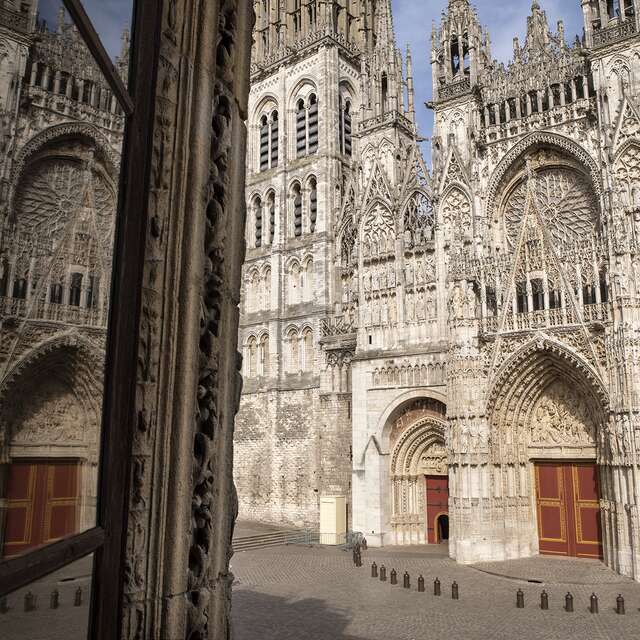
In the 1890s, Impressionist painter Claude Monet set up his easel on the first floor of the building to paint his famous “Cathedrals” series, which made the Rouen monument known the world over.
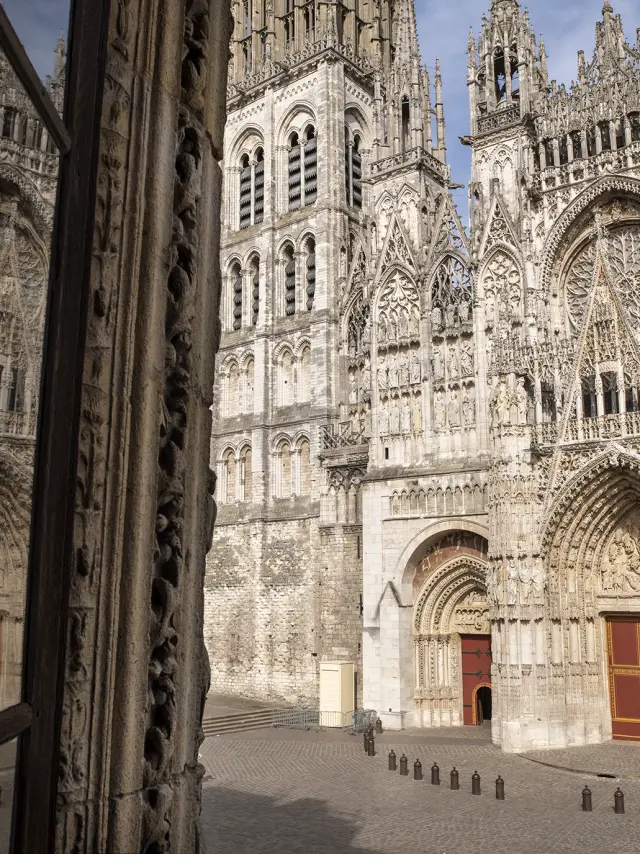 Cathedrale De Rouen Fenetre Monet Bis 2022 Bis Pod Vu 1567